
 Water damage drying
 Fire & smoke cleanup
 Mold remediation
 Storm response
 Sewage cleanup
 Reconstruction
Free visual inspection and a written scope of work before any mitigation begins - photos, moisture readings, and drying logs go in your claim file
The scope we write is the scope we bill. Anything new gets shown to you, in writing, before we touch it.
Get your free estimateFast, Reliable Water Damage Restoration Across San Jose
A burst pipe in your Willow Glen kitchen or a slow pinhole leak behind a Berryessa wall doesn’t wait for business hours, and neither do we. Emergency water damage restoration in San Jose starts with a live person answering at (669) 770-7417, 24 hours a day, seven days a week. We dispatch background-checked, uniformed technicians to every San Jose neighborhood, from Almaden Valley to Alum Rock, with the professional-grade drying equipment needed to stop the damage before it spreads. The sooner we get air movers and dehumidifiers running, the less likely you’ll face mold, warped floors, or structural rot. That’s why response time, not just equipment, is the first thing we commit to.
Why Dryden Restoration San Jose Is San Jose’s Preferred Water Damage Restoration Company
Dryden Restoration San Jose is an independently owned and operated Kingswell company, founded in 2005, and led by Carl Brandt. We don’t answer to a corporate office in another state. We answer to the homeowner whose 1960s ranch just took on two inches of water from a failed galvanized supply line. Our technicians are IICRC-trained and work to IICRC, RIA, and IFA standards, which means they follow the same moisture-mapping and drying protocols used on large commercial losses, but applied with the care a family home deserves.
What sets us apart in San Jose is the written commitment. Every customer receives a written price before any work starts. Not an estimate range, not a “we’ll see when we get in there.” A number, on paper, before a tool is touched. And every repair carries our 365-Day Done Right Promise: if a covered repair fails within a full year, we return and correct it at no additional cost. That’s documented, not verbal. We also give you a named arrival window, so you’re not waiting around all day wondering if anyone will show. And when our crew leaves, the job site is cleaner than when we arrived.
Restoration work we handle
Emergency Water Damage Restoration in San Jose
Emergency water damage restoration in San Jose means extracting standing water, setting up professional drying equipment, and documenting the full extent of the damage before it spreads into drywall, cabinetry, or under slab foundations. San Jose homeowners face this after winter storms overwhelm drainage along the Guadalupe River and Coyote Creek, after aging galvanized or copper supply lines rupture, or after a water heater lets go in a finished garage. The first 24 to 48 hours are critical. A typical emergency water extraction in San Jose runs $400 to $900 for a standard room, with full structural drying adding $1,200 to $2,800 depending on square footage and how far water migrated.
What Happens in the First Hours
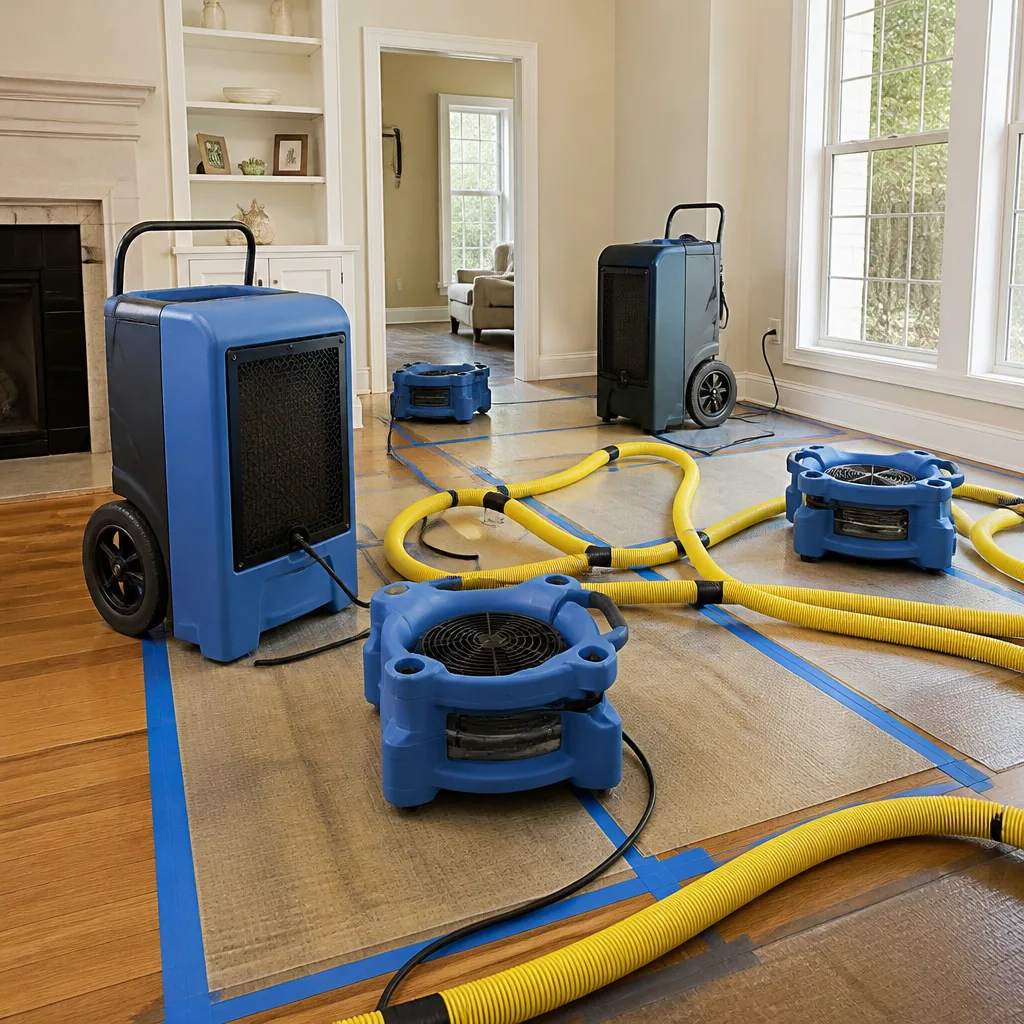
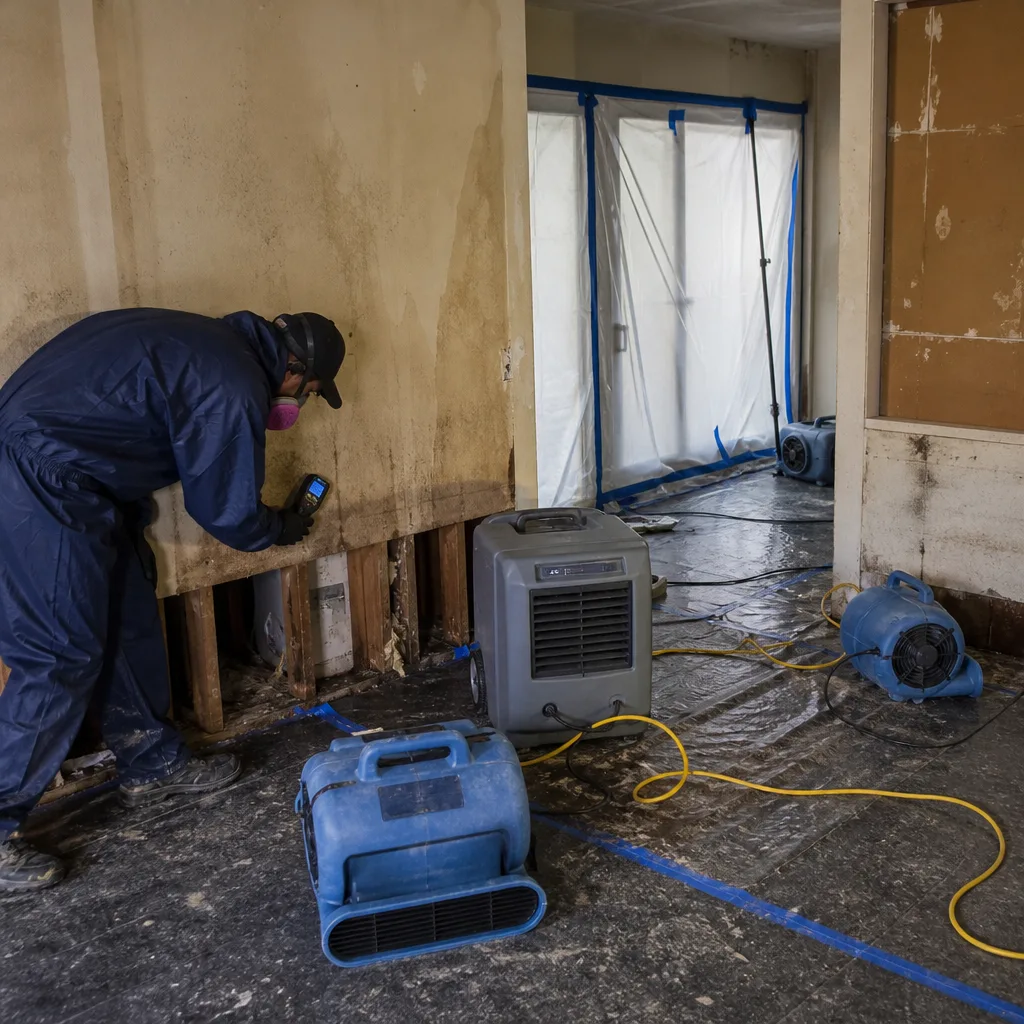
When we arrive, we start with moisture mapping. Thermal imaging cameras and penetrating moisture meters show us where water traveled, including behind stucco, under vinyl plank flooring, and into wall cavities that look dry on the surface. That’s the difference between a fast dry-out and a mold problem you’ll discover six weeks later. We then extract with truck-mounted or portable extraction units, set containment if needed, and place Dri-Eaz and Phoenix air movers alongside low-grain refrigerant dehumidifiers. Every piece of equipment is monitored daily, and you’ll see the psychrometric readings (that’s the measurement of temperature, humidity, and moisture content in the air and materials) trending down until we hit pre-loss conditions.
San Jose-Specific Drying Challenges
San Jose’s Mediterranean climate means wet winters but dry, low-humidity summers. That’s good news for drying in August, but winter storm events often bring rain that saturates the soil around slab foundations. Water wicks up through concrete, keeping relative humidity high indoors even after visible water is gone. Many 1950s-70s tract homes in neighborhoods like Cambrian and West San Jose sit on slab foundations with no crawlspace access, so drying the underside of the slab is impossible. We compensate with low-grain dehumidifiers, targeted air movement, and inline duct drying through the HVAC system when needed. This isn’t a checklist approach; it’s a psychrometric strategy tuned to the specific structure.
Water Damage Repair in San Jose
Water damage repair in San Jose is the work that comes after the drying is done: replacing drywall, repairing or repiping damaged plumbing, rebuilding affected cabinetry, and treating or replacing flooring that’s warped or delaminated. Drying stops the damage, but repair returns the home to use. In San Jose, water damage repair costs typically run $2,500 to $7,500 for a contained kitchen or bathroom loss, while whole-room reconstruction after a major supply-line rupture can reach $12,000 to $25,000, especially where custom materials or open-plan layouts are involved.
Repair vs. Retrofit for Aging Plumbing
One of the most common conversations we have with San Jose homeowners is whether to patch the immediate leak or repipe the affected section. In a 1960s Willow Glen ranch with original galvanized steel supply lines, we’ll document the internal corrosion we find, show you the photos, and give you an honest read. Sometimes a sectional repair in copper or PEX is the right call for a single failed joint. Sometimes the pipe walls have thinned to the point where another leak is inevitable, and repiping the affected run now prevents a second restoration bill later. That’s what happened last winter when our crew responded to a Willow Glen home where a galvanized line ruptured behind a kitchen wall. Water had migrated under the slab and into the family room. We traced the full extent with thermal imaging, set containment, and dried the structure to pre-loss condition. The homeowner chose a PEX repipe after we documented the corrosion, which prevents a repeat event.
Working With Your Insurance Adjuster
We photo-document everything: the initial standing water, the moisture readings, the damaged materials before removal, and the drying progress logs. That documentation gives your adjuster what they need to approve a fair settlement. Our team coordinates directly with insurance carriers, including providing written scopes with line-item pricing that adjusters recognize. If you have a water damage claim in San Jose, we can walk you through what’s covered and what’s not, before you make a decision about repairs.
Trusted Brands We Service in San Jose
Our equipment fleet includes Dri-Eaz dehumidifiers and air movers, Phoenix low-grain refrigerant units, and XPOWER axial fans, the same professional machines used on large commercial restoration jobs. These aren’t rental-store units with unknown maintenance histories. We service and calibrate our own equipment, and we match the drying system to the specific job rather than plugging in whatever’s on the truck. For San Jose homeowners with older homes, our technicians also regularly work around original plumbing from copper, galvanized, and early PEX systems, and we’re familiar with the parts and repair techniques those systems require. That matters when you need a fix that respects the age of the structure.
See the difference
 Before
 After
After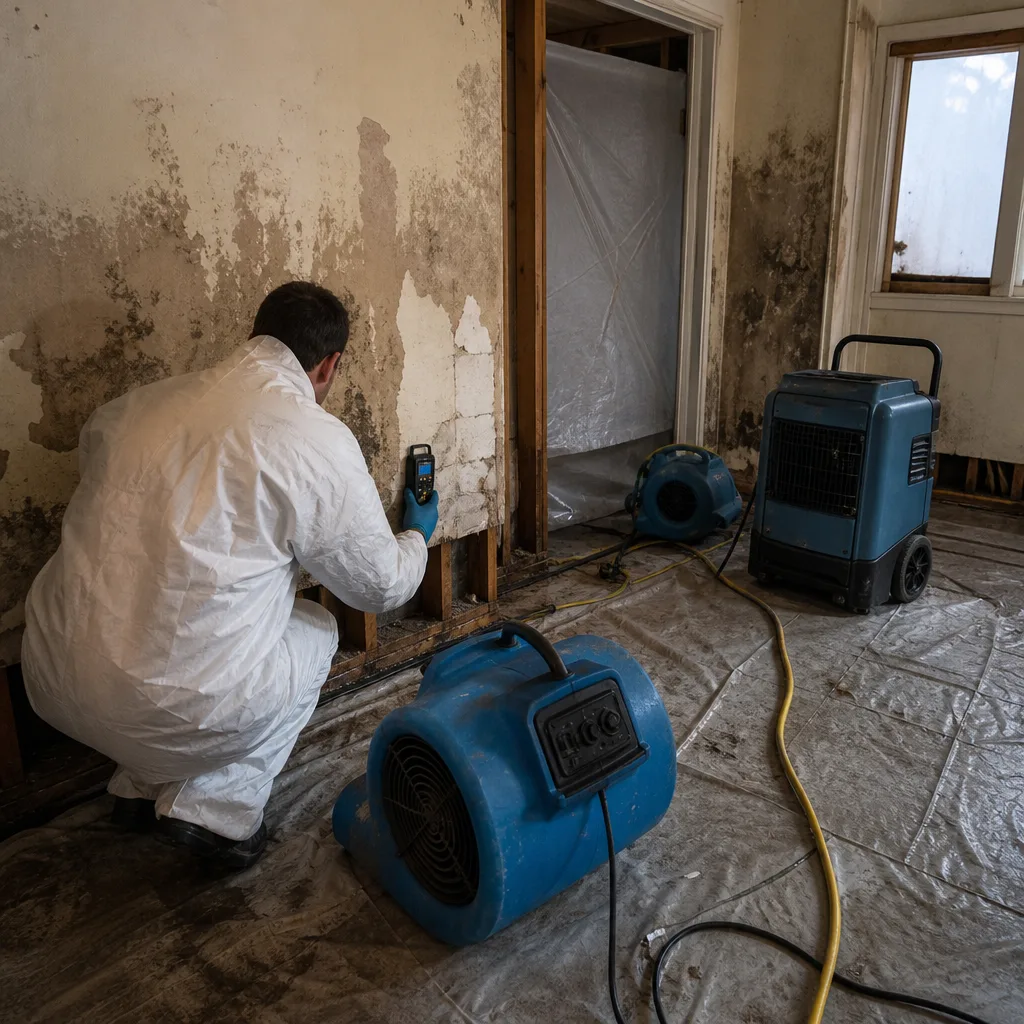 Before
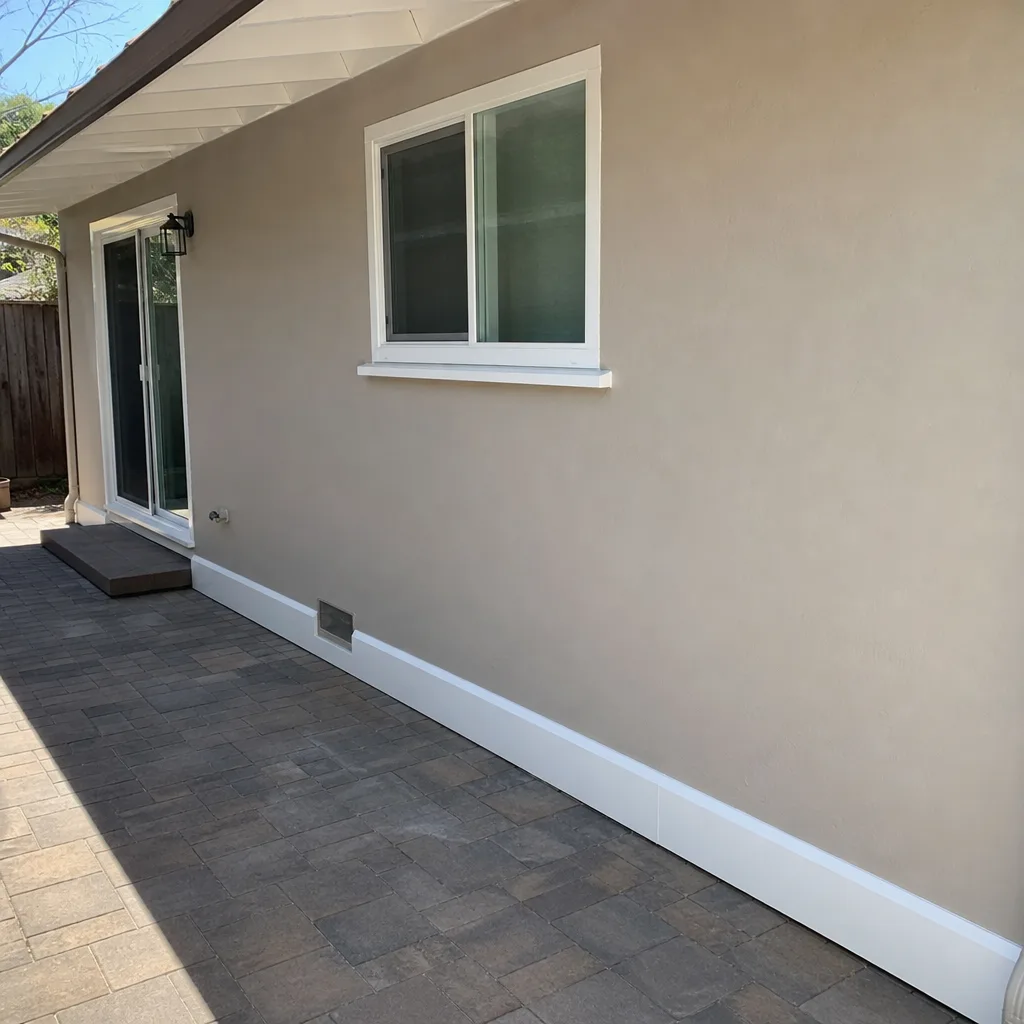 After
After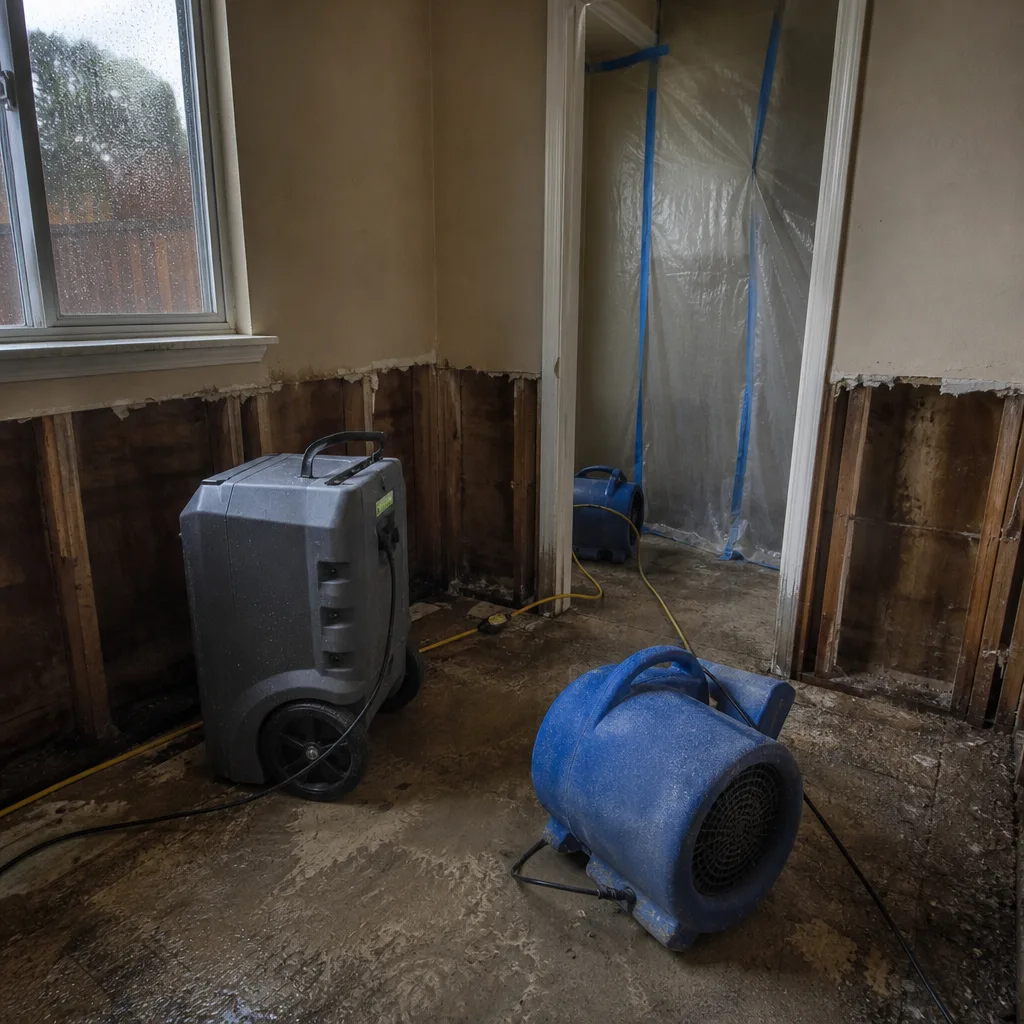 Before
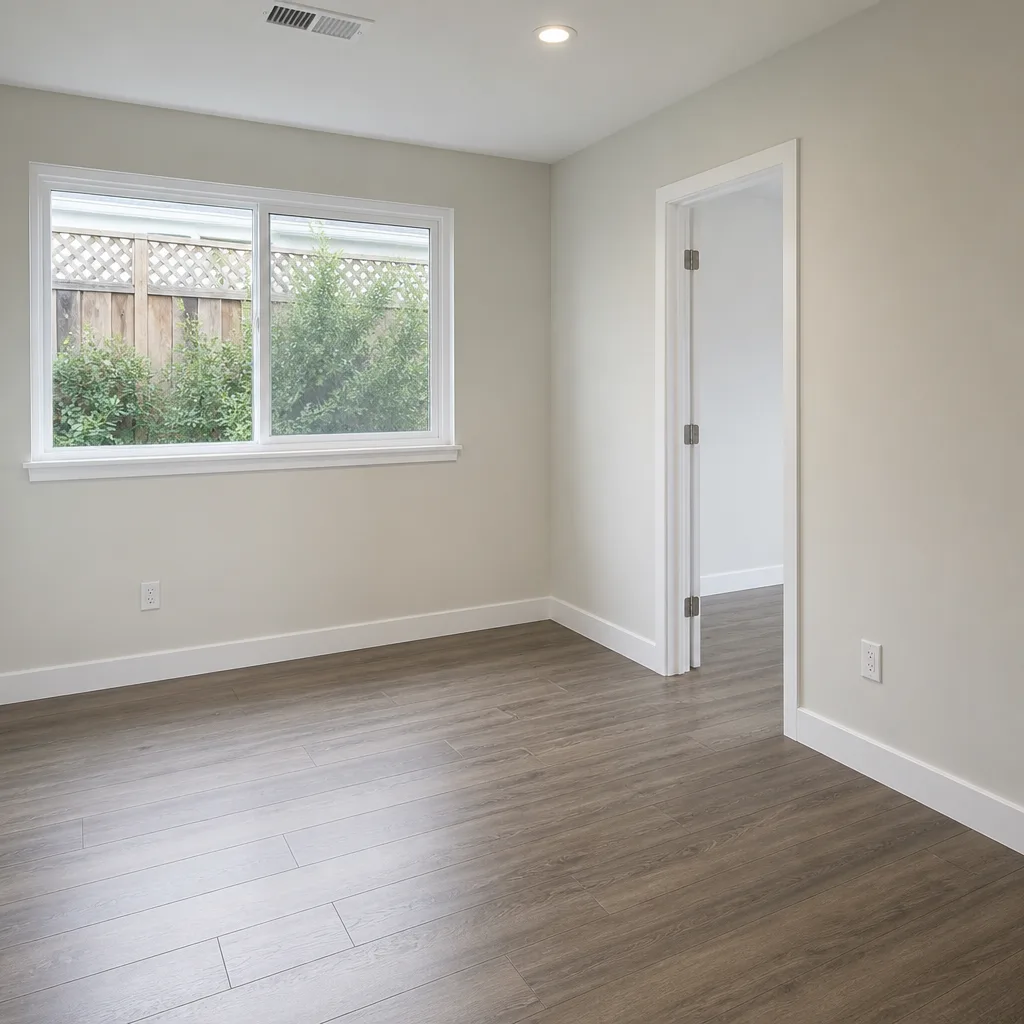 After
AfterCommon Water Damage Restoration Problems We See in San Jose Homes
- Pinhole leaks in 1970s copper supply lines. San Jose’s water has low alkalinity, which corrodes copper from the inside. In neighborhoods like Berryessa where 1970s copper is common, we regularly find pinhole leaks that have been silently saturating wall cavities for weeks or months before anyone noticed a stain.
- Galvanized steel supply lines in 1950s-70s tract homes. These pipes corrode and narrow from the inside, often presenting first as low water pressure or rust-colored water. By the time a major rupture occurs, the damage has typically spread behind walls and under flooring, requiring more extensive category 2 water mitigation.
- Slab foundation saturation from winter storms. When clay-heavy soil around San Jose slab homes becomes saturated during December-February rains, moisture wicks up through concrete. This keeps indoor relative humidity elevated even after visible water is removed, and demands a longer drying schedule with low-grain dehumidification.
- Smoke and soot intrusion during wildfire season. San Jose’s dry summer months bring smoke from regional fires that infiltrates HVAC systems and soft goods. The synthetic furnishings in newer open-plan homes burn hot and fast, and the soot they produce requires specialized cleaning of ductwork, carpets, and upholstery, not just surface wiping.
Pricing for Water Damage Restoration in San Jose, CA
We Also Serve Cities Near San Jose
If you’re in Santa Clara, Sunnyvale, Campbell, or Cupertino, our technicians are already on the road in your area and can reach your home quickly. The same written pricing, 365-Day Done Right Promise, and professional-grade equipment apply whether you’re two miles from our dispatch office or across Santa Clara County. San Jose homeowners get the same service, and if you’re nearby, you do too. Water Damage Restoration is what we do every day across the South Bay.
Serving San Jose, CA - Our Local Coverage Area
We’re based in the San Jose area and know this community well. Use the map below to see our service coverage - if you’re nearby, we can almost certainly help.
FAQs About Water Damage Restoration in San Jose
How does San Jose’s hard water affect water damage restoration after a leak from aging galvanized pipes?
San Jose’s water has low alkalinity, which means it corrodes galvanized steel and copper pipes from the inside out rather than depositing protective mineral scale. When a galvanized line fails, the water has often been carrying rust and sediment into your walls for weeks before the visible leak, which means the water damage restoration must include cleaning or replacing contaminated insulation and drywall, not just drying the surface. Galvanized pipe failures also tend to be category 2 water (grey water) because the corrosion process introduces contaminants. That’s why we include antimicrobial treatment protocols on every San Jose job involving older supply lines. Call (669) 770-7417 if you suspect an aging pipe has been leaking behind a wall.
What is the difference in drying a 1950s slab-foundation home versus a newer raised-foundation home in San Jose?
Slab foundations can’t be dried from underneath, so a 1950s ranch in Cambrian or West San Jose requires aggressive interior drying with low-grain dehumidifiers, targeted air movement, and often inline HVAC duct drying to draw moisture out of the slab edge. A newer raised-foundation home has a crawlspace, which gives us access to set drying equipment under the subfloor and install a vapor barrier if needed. The slab home typically takes 1 to 3 days longer to reach pre-loss moisture levels because concrete holds water for weeks. We calibrate the drying plan to your specific foundation type, not a generic timeline. For a free assessment of your San Jose home, call (669) 770-7417.
Are pinhole leaks in 1970s copper pipes covered by insurance if they cause hidden water damage in Berryessa?
Most homeowner’s insurance policies in California cover the sudden and accidental water damage caused by a pinhole leak, including drywall, flooring, and cabinet damage, but they do not cover the cost of repairing or replacing the leaking pipe itself. The exception is if the pipe was damaged by a covered peril like freezing. In Berryessa specifically, where 1970s copper with pinhole corrosion is common, we’ve helped many homeowners document the pipe failure, show the adjuster the interior corrosion, and get the water damage portion of the claim approved. We coordinate directly with your adjuster and provide the line-item scope they need. Every claim is different, so call (669) 770-7417 to discuss your specific situation.
How do you prevent mold after water damage from a winter storm in San Jose’s rainy season?
Mold prevention starts with getting the moisture out within 24 to 48 hours, which is why our emergency response to San Jose storm damage includes immediate extraction and placement of professional drying equipment. We use antimicrobial treatments on affected surfaces after drying, and we monitor moisture levels daily until every affected area is below the threshold where mold can grow. The longer water sits in drywall, carpet, or under baseboards during San Jose’s wet winters, the higher the mold risk. For homes along the Guadalupe River or Coyote Creek that took on flood water, we also recommend discarding saturated porous materials rather than attempting to dry and save them. Call (669) 770-7417 if water entered your home during a recent storm and you want a professional assessment.
What should I do if a Guadalupe River flood brings category 3 water into my San Jose home’s crawlspace?
Category 3 water, also called black water, contains sewage, river sediment, and pathogens, and requires full protective equipment, containment, and disposal of affected porous materials. If Guadalupe River flood water entered your crawlspace or living areas, do not enter the flooded space without protective gear. Call us at (669) 770-7417 immediately. We’ll set containment, pump the water out, remove saturated insulation and vapor barrier, treat the space with antimicrobials, and dry the structure to pre-loss moisture levels. Category 3 water is not a DIY situation, and a proper response prevents long-term mold and structural rot in the crawlspace. Our San Jose team has handled localized flood events along the Guadalupe and Coyote Creek and can be on site quickly during and after storm events.
Written by Carl Brandt, Owner at Dryden Restoration San Jose, led by Carl Brandt and serving San Jose, CA. We’re an independently owned and operated Kingswell company, founded in 2005, with live phone support 24 hours a day at (669) 770-7417.