

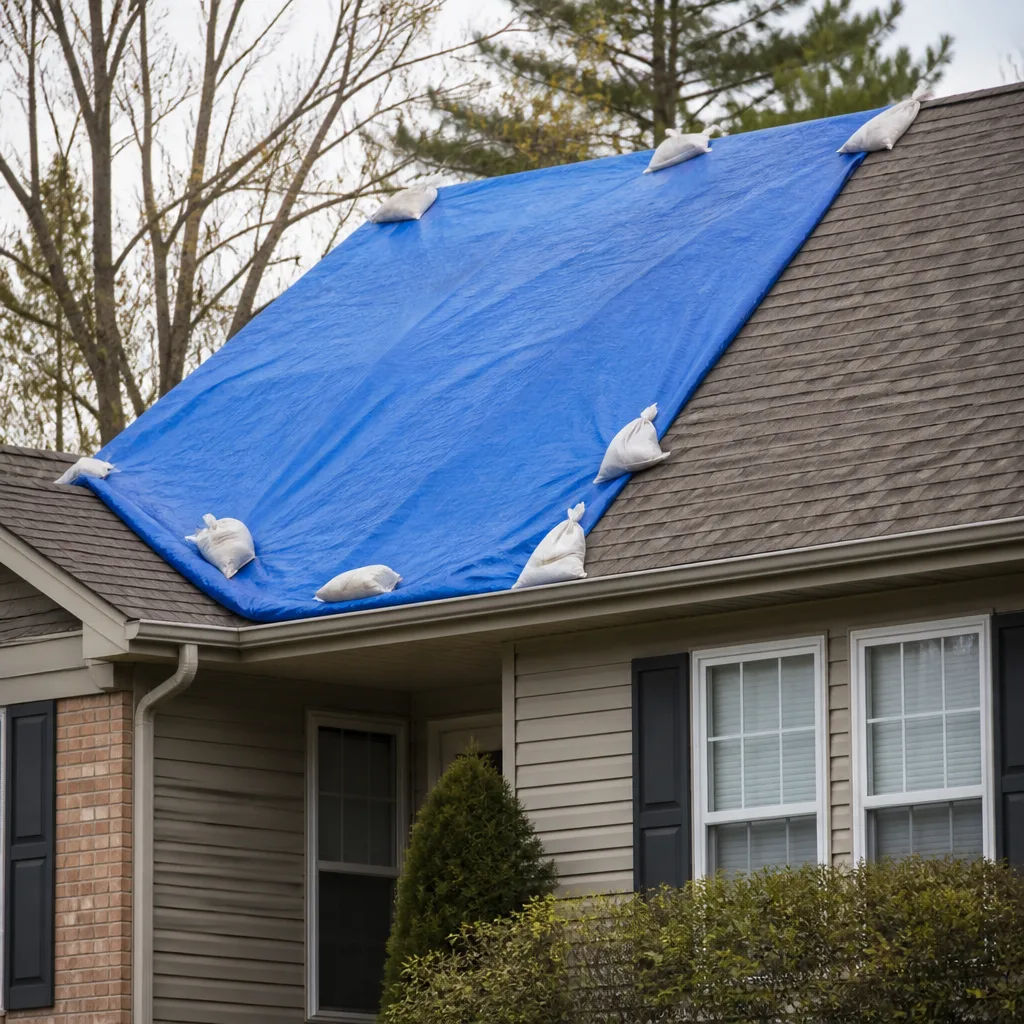
 Storm response
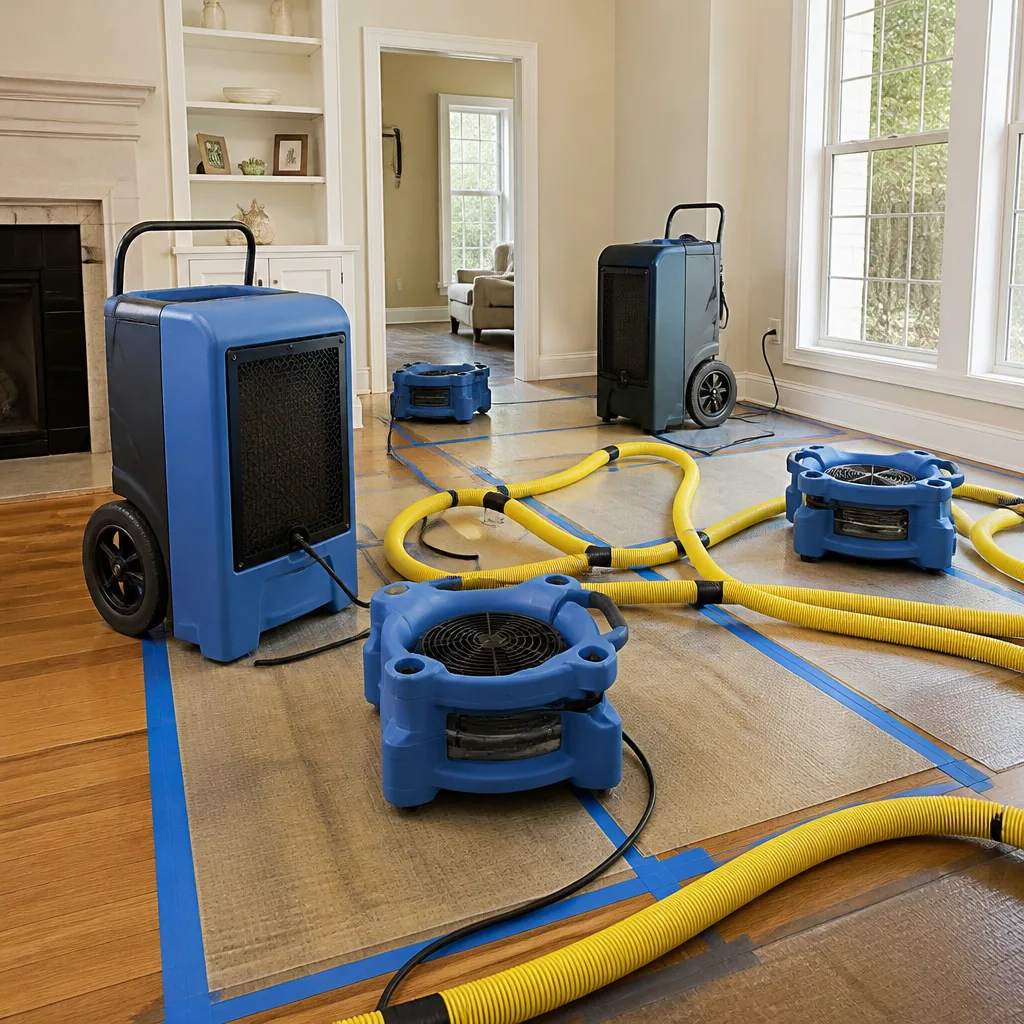 Water damage drying
 Fire & smoke cleanup
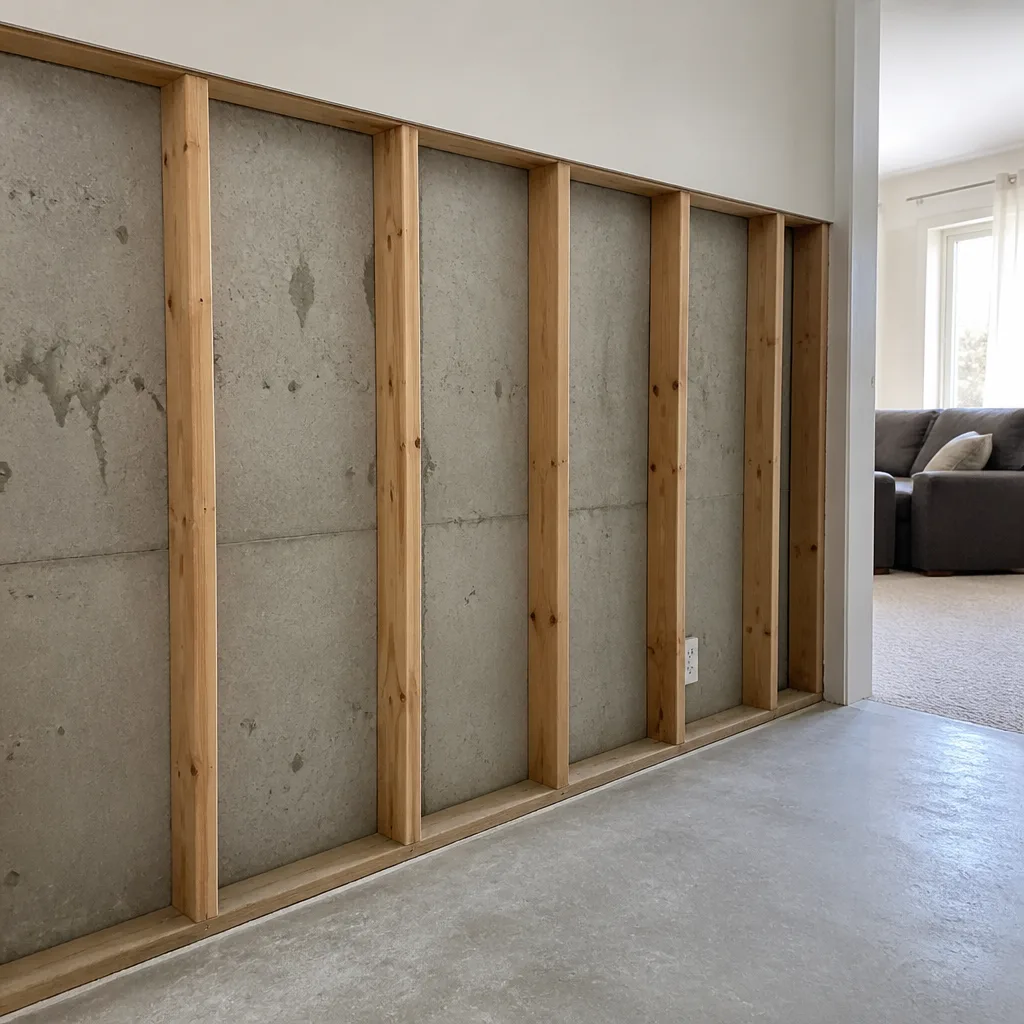 Mold remediation
 Sewage cleanup
 Reconstruction
Free visual inspection and a written scope of work before any mitigation begins - photos, moisture readings, and drying logs go in your claim file
The scope we write is the scope we bill. Anything new gets shown to you, in writing, before we touch it.
Get your free estimateRestoration work we handle
See the difference
 Before
 After
After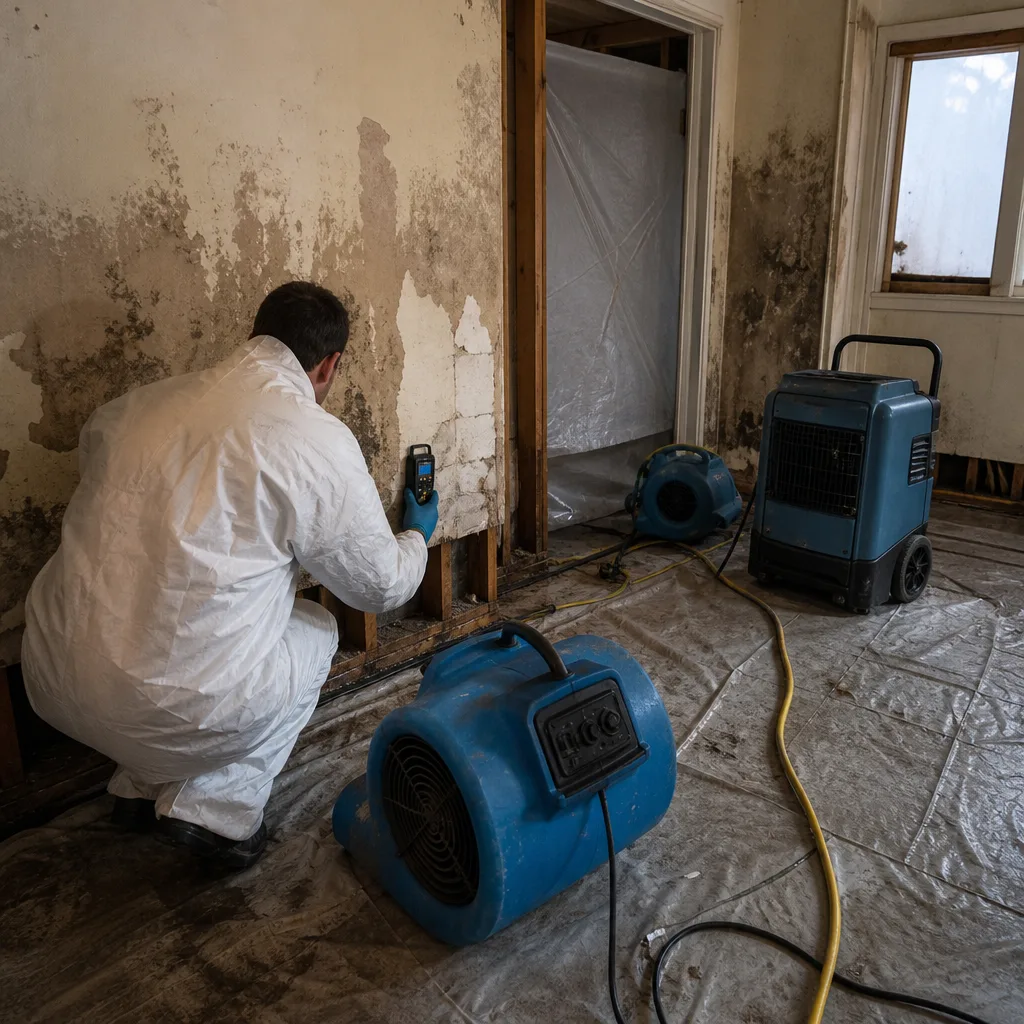 Before
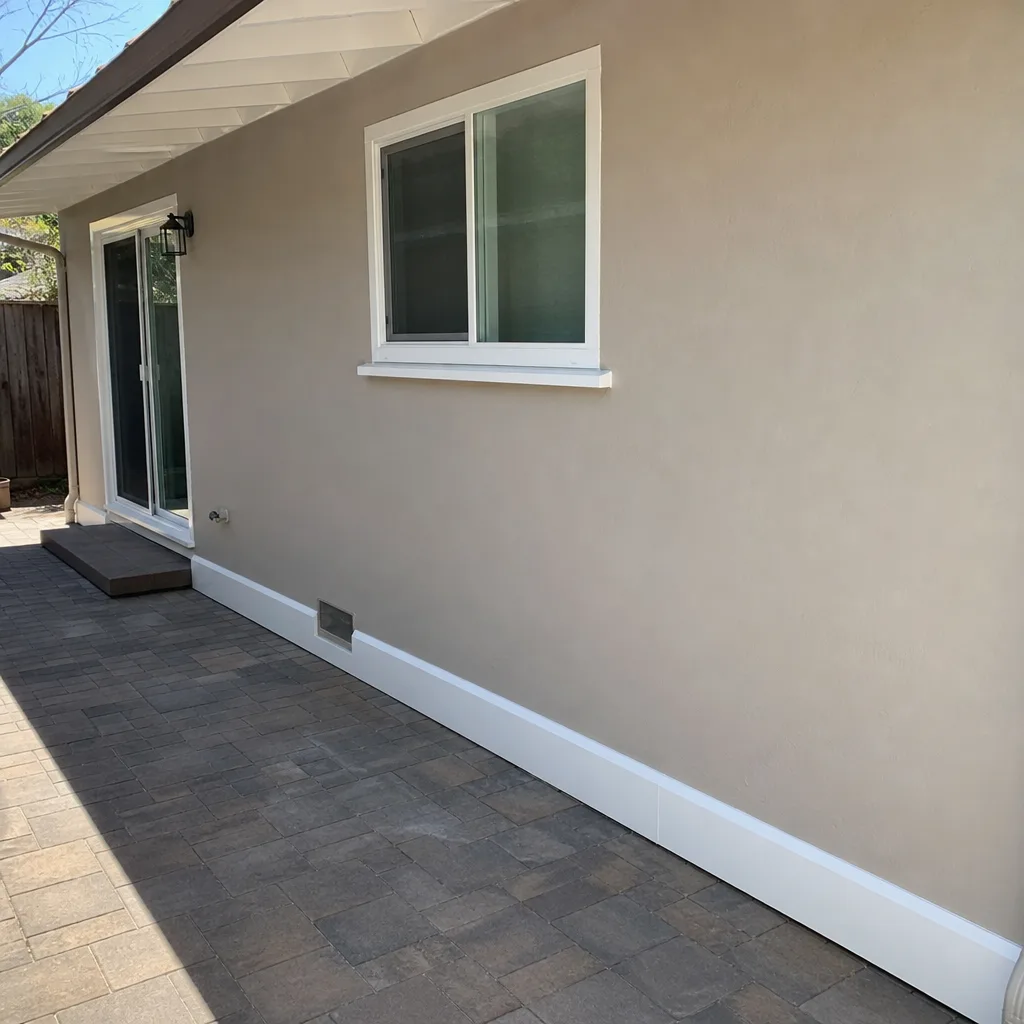 After
After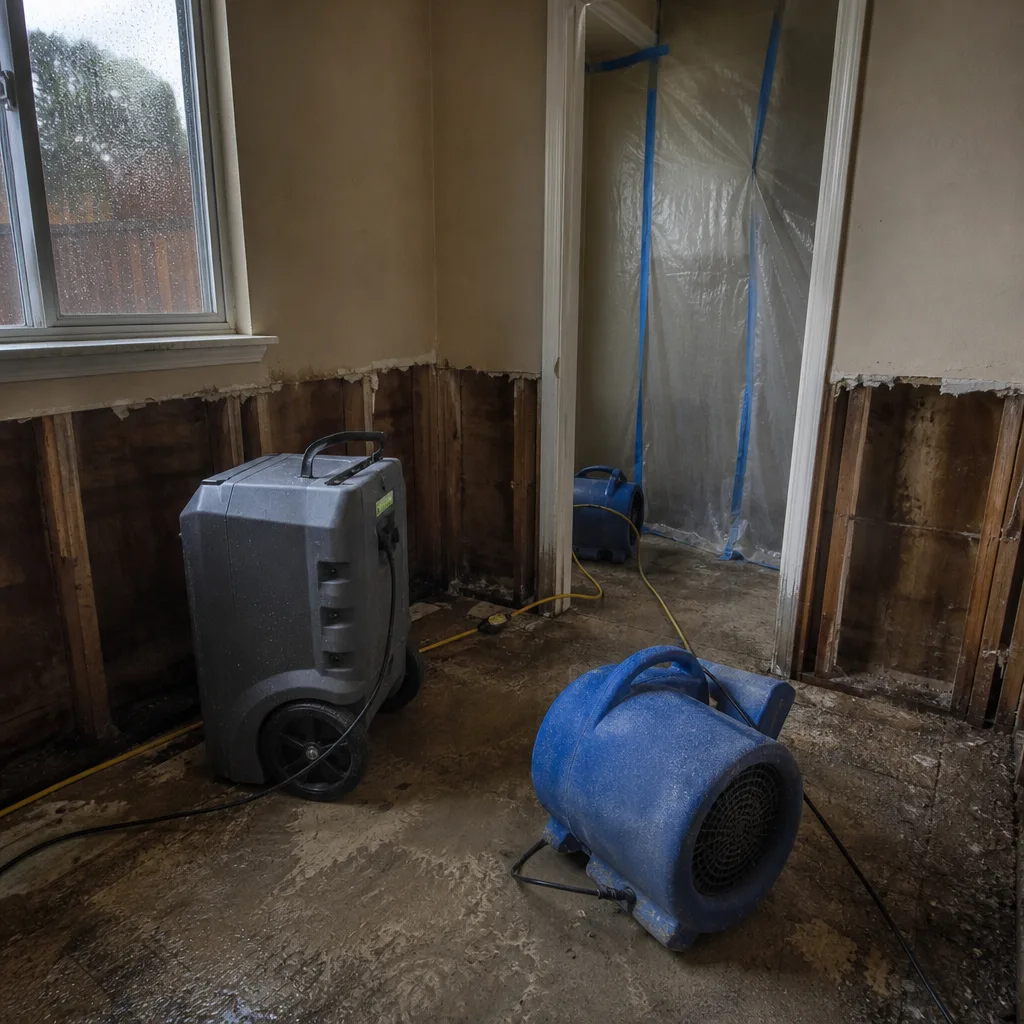 Before
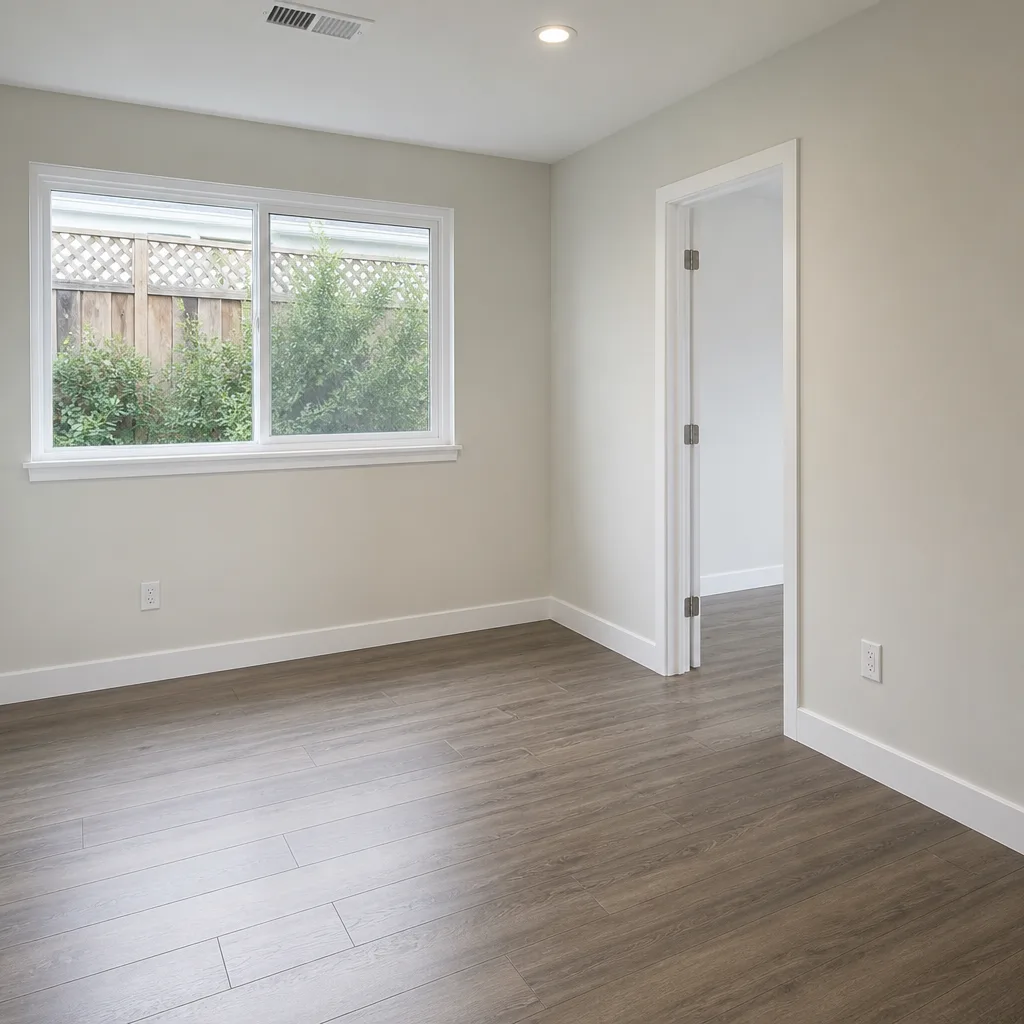 After
AfterHow Much Does Storm & Disaster Restoration Cost in San Jose?
Storm and disaster restoration in San Jose typically runs between $1,800 and $8,500 for most residential water damage repairs, with fire damage starting around $3,200 and climbing past $25,000 for full room rebuilds. Roof-related storm damage adds another layer: tarping and temporary sealing usually costs $400 to $1,200, while full roof replacement after a severe Santa Clara County storm starts at $12,000. The exact number depends on what got damaged, how fast you caught it, and whether you’re dealing with clean rainwater or contaminated flood water.
We’ve restored homes in San Jose since 2005, and the numbers above reflect what we actually see in neighborhoods from Willow Glen to Evergreen, not national averages that mean nothing when your living room is under two inches of water. Carl Brandt, who leads our restoration teams, insists on one thing before any tool comes off the truck: a written price. You’ll know the number before we start, and it won’t change at your door.
Key Takeaways
- Water damage from storms: $1,800 to $8,500 for typical residential repairs
- Fire and smoke restoration: $3,200 to $25,000+ depending on room count and structural damage
- Roof tarping and emergency sealing: $400 to $1,200
- San Jose’s rainy season (November through March) drives most storm restoration calls
- Insurance claims can shift your out-of-pocket cost to just your deductible, often $500 to $2,500
- Free estimates are available by calling (669) 770-7417
Storm & Disaster Restoration Cost Breakdown (2026)
Here’s what our San Jose crews quote for common storm and disaster restoration jobs. These are real numbers from the past 12 months of work across Santa Clara County, from Alum Rock to Almaden Valley:
| Restoration Service | Typical San Jose Price Range | What It Includes |
|---|---|---|
| Water extraction (standing water removal) | $500 – $2,200 | Truck-mounted extraction, moisture mapping, initial sanitization |
| Structural drying (fans, dehumidifiers, monitoring) | $800 – $3,000 | Dri-Eaz and Phoenix equipment, daily RH checks, 3 – 7 days typical |
| Drywall replacement (per room) | $900 – $2,800 | Cutout, disposal, new drywall, texture match, prime |
| Flooring removal and replacement (per 300 sq ft) | $1,500 – $4,500 | Laminate, hardwood, or carpet + pad; subfloor drying included when needed |
| Roof tarping (emergency storm response) | $400 – $1,200 | Wood furring strips, heavy-duty tarp, nails, temporary seal |
| Mold remediation after water intrusion | $1,500 – $6,000 | Containment, HEPA air scrubbing, antimicrobial treatment, disposal |
| Fire and smoke restoration (per room) | $3,200 – $8,500 | Soot removal, odor treatment, surface cleaning, sealing |
| Full kitchen fire rebuild | $15,000 – $35,000 | Cabinet replacement, countertops, drywall, painting, flooring |
| Storm sewer backup cleanup | $2,500 – $7,000 | Category 3 water removal, disposal, sanitization, drying |
What moves these numbers up or down in San Jose specifically? The age of your home matters a lot. Many houses in the Rose Garden and Naglee Park neighborhoods were built before 1960, which often means plaster walls instead of drywall. Plaster holds water differently and takes longer to dry, adding 20 to 30 percent to labor costs. Homes in newer developments like Berryessa or parts of North San Jose tend to have open floor plans with standard drywall, which dry faster and cost less per square foot.
Another San Jose factor: crawl spaces. A significant share of single-family homes here are built over raised foundations, and storm water that gets into a crawl space creates a different problem than slab leaks. Crawl space drying requires access cuts, pumps, and sometimes vapor barrier replacement, which adds $1,000 to $3,500 to a typical job. We mention this because national pricing guides rarely do, and it’s one of the most common cost surprises for San Jose homeowners.
What Affects Storm & Disaster Restoration Pricing in San Jose
- Water category. Clean rainwater from a roof leak (Category 1) costs less to handle than flood water or sewer backup (Category 3), which requires full containment, disposal of porous materials, and aggressive sanitization. Category 3 jobs in San Jose run 40 to 60 percent higher than Category 1 for the same square footage.
- How quickly you call. Water that sits for 24 hours in a warm San Jose home starts growing mold inside wall cavities. What could have been a $2,000 drying job becomes a $5,000 remediation because drywall has to come out. Morning calls cost less than next-day calls, every time.
- Materials affected. Solid hardwood floors in older Cambrian or Willow Glen homes can sometimes be saved with Injectidry panel drying, but laminate and engineered wood almost always get replaced. The material in your home determines whether you’re paying for drying equipment at $200 per day or new flooring at $6 to $15 per square foot.
- Structural accessibility. Vaulted ceilings, tight attics, and raised foundations all slow down equipment placement and moisture monitoring. Homes in the Santa Teresa foothills with hillside construction have more complex water paths than flat-lot homes in West San Jose, and labor hours reflect that.
- Seasonal demand. San Jose’s storm season peaks from December through February, and restoration crews across the South Bay run at capacity. Off-peak water damage calls in the summer often get same-day response with more scheduling flexibility, which can trim 10 to 15 percent off emergency after-hours rates.
- Insurance involvement. If you’re filing a claim, your insurer sends an adjuster who sets an approved scope of work. That scope can be lower than what a contractor would recommend independently. We work directly with adjusters to document every line item, and in most cases we can get the approved scope close to what the home actually needs.
Storm Damage Restoration in San Jose: What Actually Happens on the Job
Before we get to money-saving advice, it helps to understand what a storm and disaster restoration project actually involves from start to finish. Not every job looks the same, but the sequence is consistent because the science of drying demands it.
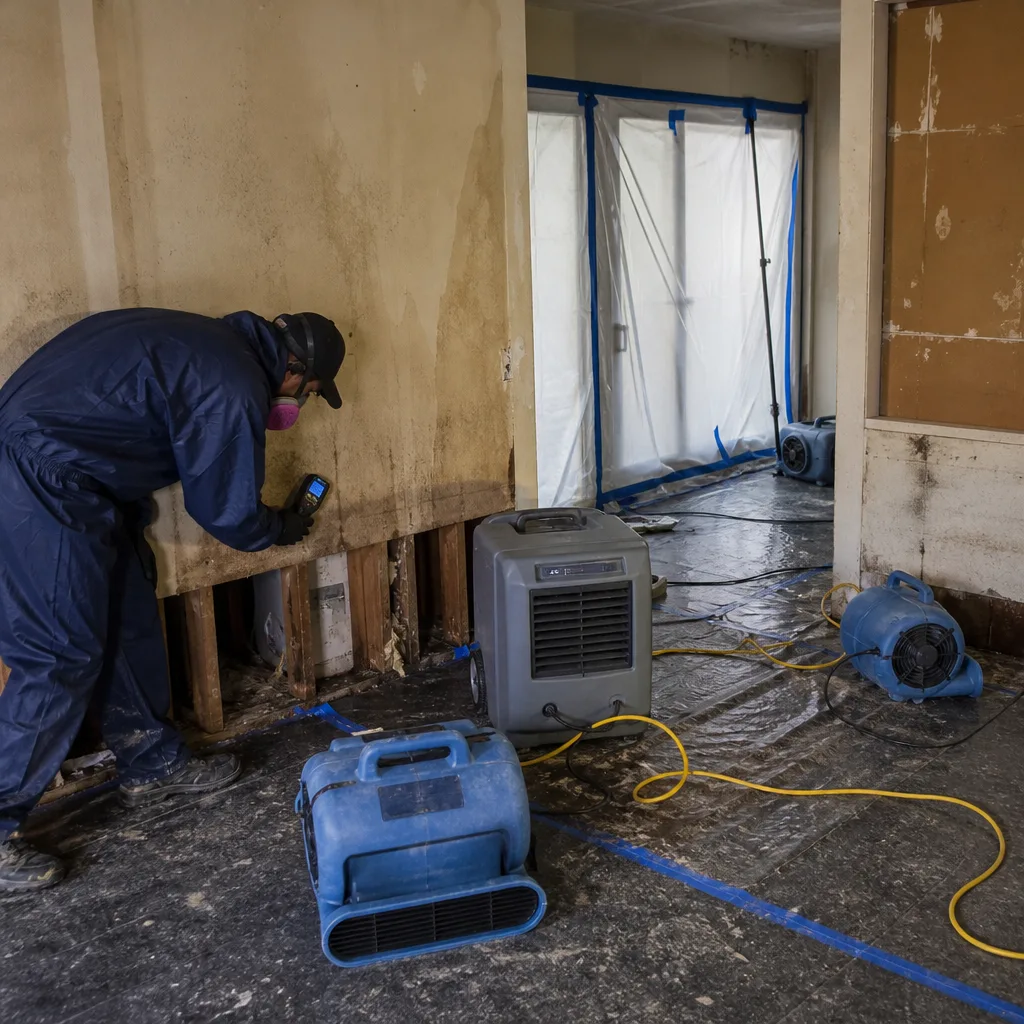
The first thing we do is map the water. Technicians use moisture meters and thermal imaging cameras to find how far water has traveled, because what’s visible on the surface is rarely the full story. Water moves through sill plates, under baseboards, and into wall cavities. If you skip this step, you dry the visible area and leave hidden water behind, which is how homeowners end up with mold six weeks later.
Next comes extraction. Standing water gets pulled out with truck-mounted extractors that move hundreds of gallons per hour. After extraction, we place air movers and dehumidifiers, set to a drying plan based on psychrometric readings. Psychrometrics is just the study of how temperature and humidity interact, and it tells us exactly how many days your structure needs to dry. We check relative humidity (RH) daily and document everything, because your insurer wants proof of due diligence, and so do you.
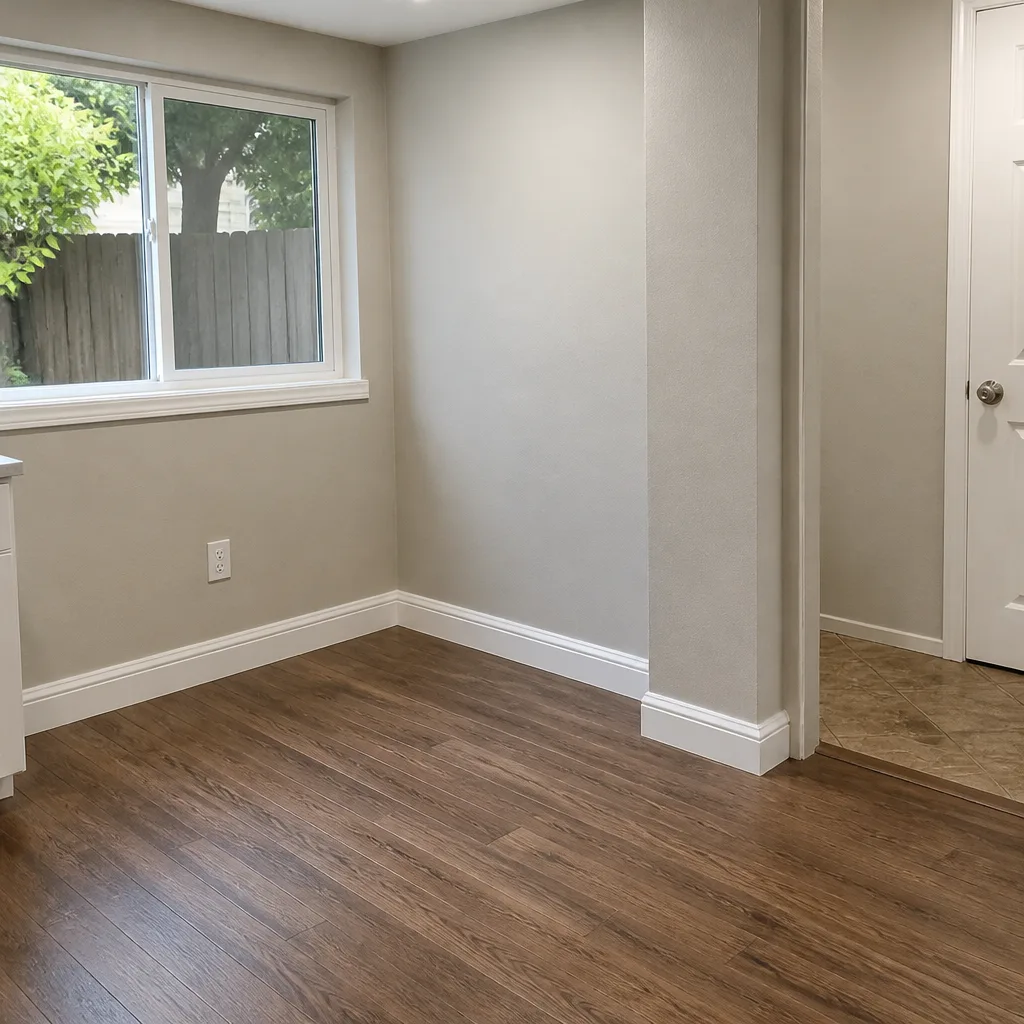
Then comes rebuild. Drywall, baseboards, flooring, paint, sometimes cabinetry. Our crews handle everything in-house, so there’s no handoff to an unknown subcontractor who may or may not show up. Every technician who walks into your home is background-checked and wearing a Dryden uniform, so you know who belongs there. That last point matters more than people realize, especially when you’ve got contractors in and out for several days.
How to Save on Storm & Disaster Restoration
Saving money on storm damage restoration isn’t about finding the cheapest contractor. It’s about acting fast, documenting thoroughly, and avoiding duplicate work. Here’s what actually keeps costs down in San Jose:
Call within the first hour. Every hour of standing water adds to the square footage of damaged drywall and flooring. A roof leak at 9 AM in Almaden that gets called in by 10 AM is often a $1,500 drying job. The same leak discovered at 9 PM is a $4,000 repair because the ceiling insulation is soaked and the drywall has started to sag. Speed is the single biggest money factor in your control.
Take photos before anything moves. Your insurance claim is only as good as your documentation. Before you move one piece of furniture or pull up any carpet, photograph everything from multiple angles. Include the water source if you can see it. Adjusters in the San Jose market approve claims faster when homeowners present clear, timestamped photos on the first contact.
Stop the water at the source, if you can. If water is coming from a burst supply line or an appliance, shut off the closest valve. If it’s a roof leak during a storm, place buckets and move valuables. Don’t climb onto a wet roof in the rain; that’s a job for a professional with proper safety gear. But everything you can do at ground level reduces the damage footprint.
Ask for a written price before work starts. This is the single most effective way to avoid the biggest hidden cost in restoration: the ballooning final bill. At Dryden, you get a line-item price in writing before we touch a tool. If the drying plan changes, we discuss the new number before proceeding. You should accept nothing less from any contractor you call.
Don’t wait to file your insurance claim. Most homeowner policies in California require prompt notification of loss, and delayed reporting can reduce your payout. Your deductible typically runs $500 to $2,500 in San Jose, and everything above that is covered. The earlier you file, the sooner your adjuster can assess the damage before secondary issues like mold complicate the claim.
Use your free estimate. We don’t charge for estimates, even on weekends. Call (669) 770-7417 and a live person answers, 24 hours a day. We’ll give you a straight price range over the phone and schedule a site visit if needed. If the problem turns out to be smaller than you thought, we’ll tell you that, too.
Common Storm Restoration Scenarios in San Jose and What They Cost
Storm damage in San Jose rarely looks like the dramatic flooding you see on national news. It’s more often a slow problem that becomes urgent, like a saturated crawl space after three days of atmospheric river rain, or a chimney flashing that finally fails during a February windstorm. Here are the scenarios we see most, with real numbers:
Roof leak through the ceiling. A wind-driven rain storm blows water under aging roof flashing or through a cracked tile. Water accumulates in the attic, soaks the insulation, and eventually stains the living room ceiling. The fix: tarp the roof ($400 to $1,200), remove wet insulation ($300 to $800), dry the attic with a dehumidifier and air mover ($600 to $1,500), and replace the stained drywall ($900 to $2,200). Total range: $2,200 to $5,700 before roof repairs, which are billed separately by a roofing contractor.
Window or door leak during heavy rain. Older aluminum-frame windows in San Jose’s 1960s and 1970s housing stock often leak where the frame meets the stucco. Water travels down inside the wall and pools in the sill plate. Because the water is relatively clean, this is a Category 1 job. Typical drywall cutout, drying, and repair costs run $1,500 to $3,500, and the window resealing runs another $400 to $900 through a glazing contractor.
Sewer backup from storm drain overload. When San Jose’s older combined sewer sections get overwhelmed by heavy rain, the result is sometimes a backup into lower-level drains and toilets. This is Category 3 water, the most expensive to handle. You’re looking at water extraction, carpet and pad disposal, lower drywall cutout, antimicrobial treatment, and drying. Costs range from $4,000 to $9,000, and most homeowner policies cover this only if you have a specific sewer backup endorsement. Check your policy now, not when it happens.
Fallen tree branch through a window. Winter storms with 40 to 50 mph gusts bring down limbs across the South Bay. The glass breakage is a glazier’s job, but the water that gets in through the open window is ours. If you catch it within hours, the damage is typically localized to the room. Expect $1,800 to $4,200 for drying, drywall replacement, and flooring repair in the affected area. The tree removal is separate.
Insurance and Storm Damage: What San Jose Homeowners Need to Know
Most San Jose homeowners carry a standard HO-3 policy, which covers sudden and accidental water damage from storms. That means a wind-blown roof leak is covered, but a leak that developed over months due to deferred maintenance is not. Insurance adjusters in California are increasingly strict about the difference, and they look for maintenance records and physical evidence when deciding your claim.
Your deductible is the amount you pay before insurance kicks in. In San Jose, we see deductibles from $500 to $2,500 for most policies, with $1,000 being the most common. If your storm damage estimate comes in at $8,000 and your deductible is $1,000, the insurer covers $7,000. A good restoration contractor will help you document the full scope so the insurer’s estimate reflects reality.
One thing we always flag for our San Jose customers: water damage claims can affect your renewal premium, and two or more claims in a three-year period may trigger non-renewal in the California market. If your damage is close to your deductible amount, you may be better off paying out of pocket. We’ll give you an honest assessment so you can make that call with real numbers, not pressure.
FAQs – Storm & Disaster Restoration Cost
How much does storm damage restoration cost in San Jose?
In San Jose, storm damage restoration costs between $1,800 and $8,500 for most water-related residential work, with roof tarping at $400 to $1,200 as an immediate response measure. Fire restoration from storm-related electrical incidents starts around $3,200 per room. Your specific cost depends on the water category, affected square footage, and materials. Call (669) 770-7417 for a free, no-obligation estimate based on your specific situation.
Does homeowners insurance cover storm damage restoration?
Yes, standard California HO-3 policies cover sudden storm damage, including roof leaks, wind-driven rain intrusion, and water damage from storm-related events. Your out-of-pocket cost is typically your deductible, which in San Jose runs between $500 and $2,500. The claim must be for sudden damage, not a pre-existing leak. We document every job to IICRC, RIA, and IFA standards, which helps your adjuster process the claim faster and with fewer disputes.
Is storm water damage considered the same as flood damage?
No, and the distinction costs San Jose homeowners real money. Storm damage from rain entering through a roof, window, or wall is covered by standard homeowner policies. Flood damage, defined as rising water from overflowing lakes, rivers, or saturated ground coming in through foundation or ground-level entry, requires separate flood insurance through FEMA’s NFIP program. In San Jose, neighborhoods near Coyote Creek, Guadalupe River, and Los Gatos Creek are in designated flood zones, and homeowners there should verify their flood policy status before the rainy season starts.
How long does storm damage restoration take?
Structural drying takes 3 to 7 days for most San Jose storm water damage, using professional-grade Dri-Eaz, Phoenix, and XPOWER equipment. Rebuild work, including drywall replacement, painting, and flooring, adds another 5 to 14 days. A typical storm restoration project from emergency call to final walkthrough runs 2 to 3 weeks. Emergency extraction and tarping happen same-day in most cases, which is why we answer phones live 24 hours a day at (669) 770-7417.
Can I do storm damage cleanup myself to save money?
You can handle small puddles, moving furniture, and photographing damage, but structural drying requires equipment and moisture mapping that retail rental fans can’t match. Wet drywall, saturated insulation, and water in wall cavities need professional extraction and controlled drying to prevent mold; doing it halfway now often means paying to redo it properly later, plus mold remediation on top. San Jose’s climate adds urgency: indoor temperatures above 70 degrees accelerate mold growth inside 24 to 48 hours. The most valuable DIY step is calling (669) 770-7417 quickly, because the first hour of response is the last hour of damage spread.
What the 365-Day Done Right Promise Means for Your Repair Bill
Here’s a San Jose restoration truth most companies won’t say out loud: the industry has a reputation for repairs that fail after the check clears. Homeowners get dried out, rebuilt, and handed a final bill, only to watch drywall tape crack six months later or discover a corner that never fully dried. Then they call the contractor back and get voicemail.
We built the 365-Day Done Right Promise because Carl Brandt got tired of seeing that happen to homeowners across Santa Clara County. Every Dryden job includes a written guarantee: if a covered repair fails within a full year, we come back and fix it at no charge. No pro-rating, no argument about whose fault it was, no invoice. It’s written on every job we do, and it’s the reason we’re careful to dry and rebuild correctly the first time.
When you compare restoration quotes, ask each contractor what their guarantee actually says. Does it exist on paper? Does it cover the specific work they’re quoting? What triggers the return visit? If the answer is verbal and vague, you’re signing up for a gamble. Our guarantee is the same on every job, from a $1,500 drying call to a $35,000 fire rebuild: written price before work starts, named arrival window, clean job site, and 365 days of standing behind the work.
Get Your Free Storm Damage Estimate in San Jose
If you’re dealing with storm damage right now, the most important number in this guide is the one you can call: (669) 770-7417. A live person answers every time, day or night, not an answering service or a callback queue. We’ll ask what happened, give you a straight price range over the phone, and schedule a visit if you want one.
If you’re researching ahead of time, save the number somewhere you can find it during the next storm. San Jose’s rainy season runs November through March, and atmospheric river events can arrive with less than 48 hours of notice. When water is coming through your ceiling at 2 AM, you don’t want to be scrolling through browser history.
Storm damage restoration in San Jose costs what it costs based on water category, square footage, materials, and speed of response. What it should never cost is your trust. We’ve served the South Bay since 2005 as an independently owned and operated Kingswell company, and every job comes with the same commitments: a written price before a tool is touched, a named arrival window, a clean job site, and a written 365-Day Done Right Promise. That’s how we’ve always done it, and it’s how we’ll do it on your job.
From our home base in San Jose, we respond to storm damage calls across the entire metro area, from the Rose Garden to Evergreen, from Willow Glen to Berryessa. Call (669) 770-7417 for a free estimate, or to ask any question about storm restoration costs. You’ll get a straight answer, whether it’s an emergency or just planning ahead.
Pricing reflects the San Jose market as of 2026. Dryden Restoration San Jose offers free estimates – call (669) 770-7417.
Written by Carl Brandt, Owner at Dryden Restoration San Jose, serving San Jose since 2005.
What Our Customers Say
"Fridge line leaked behind the cabinets for weeks. They found the hidden water, dried it properly, and checked it for a few days before signing off. Thorough and honest."
- Phil Hargis"Honest crew. They could have told me the whole floor needed to come up. Instead they dried it properly, monitored it for a few days, and saved most of the hardwood. Checked their own work before closing it out."
- Andre Washington"Found mold behind the bathroom wall after a slow leak. They tested it, showed me what they found, and were upfront that it was a smaller job than I feared. No scare tactics, fair price."
- Monica Shelby